
What can you throw in a dumpster? Renting a dumpster is one of the easiest ways to handle cleanup projects, but many customers ask the same question before delivery:
What am I actually allowed to throw in it?
The answer depends on the type of debris, local disposal rules, and safety requirements. Most everyday junk and construction materials are fine, but some items require special handling.
Knowing the rules ahead of time helps you avoid delays, extra fees, and pickup problems.
Items Commonly Allowed in a Dumpster
For most cleanouts and renovation jobs, these items are usually accepted:
Household Junk
- Furniture
- Mattresses
- Toys
- Clothing
- Boxes
- General clutter
- Non-hazardous trash
Construction Debris
- Drywall
- Wood
- Cabinets
- Flooring
- Siding
- Roofing materials
- Fixtures
Yard Waste
- Branches
- Leaves
- Shrubs
- Brush
- Small logs
- Landscaping debris
Remodeling Materials
- Countertops
- Doors
- Trim
- Shelving
- Old vanities
These are some of the most common reasons people rent dumpsters in the first place.
Items Often Restricted or Prohibited
Some materials cannot go into standard dumpsters because of landfill rules or environmental regulations.
These often include:
- Paints and solvents
- Chemicals
- Gasoline
- Propane tanks
- Batteries
- Tires
- Refrigerators
- Air conditioners
- Electronics
- Hazardous waste
- Medical waste
Rules can vary, so always ask first.
Why Certain Items Are Restricted
Many restricted items contain chemicals, pressure, refrigerants, or components that require special disposal.
Throwing them in a regular dumpster can create:
- Safety hazards
- Environmental violations
- Delayed pickup
- Added disposal charges
- Rejected loads
A quick question before loading can prevent all of that.
Can I Throw Away Appliances?
Sometimes yes, sometimes no.
Appliances like washers or dryers may be accepted, while refrigerators or AC units may need special handling due to refrigerants.
Always mention appliances when booking your rental.
Can I Load Concrete, Dirt, or Brick?
Yes in many cases—but heavy debris may require specific containers or load limits.
Because these materials weigh so much, they’re often handled differently than household junk.
Best Practices for Loading Your Dumpster
To maximize space and keep pickup safe:
- Break down bulky items
- Load flat items first
- Distribute weight evenly
- Keep debris below the top edge
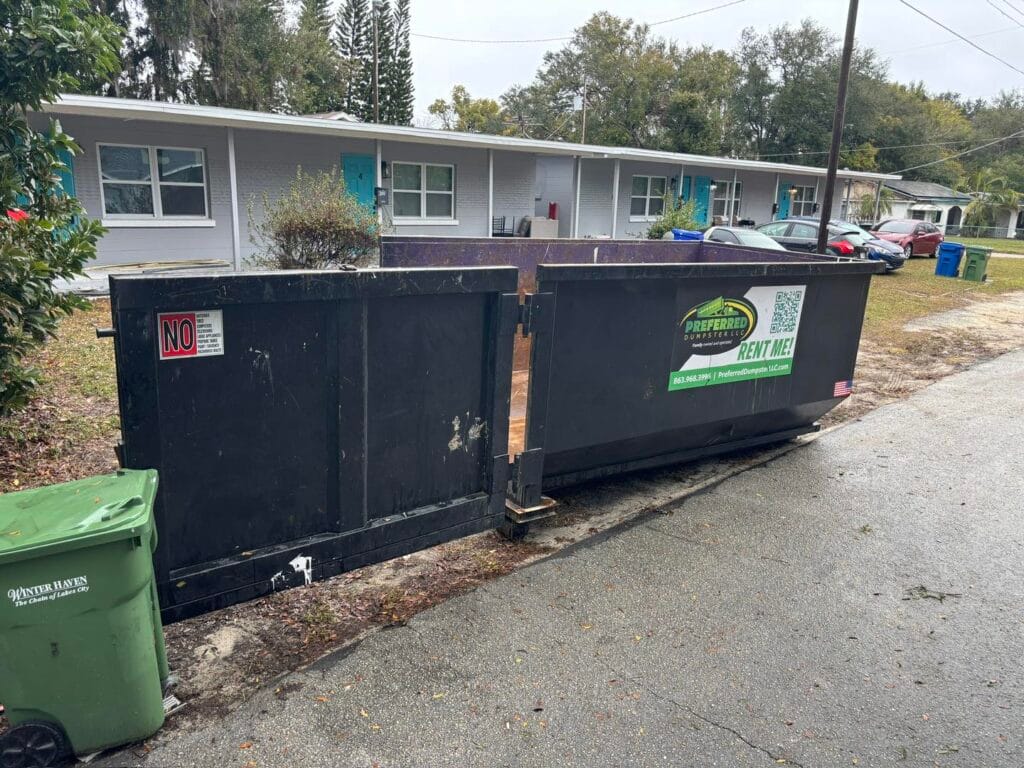
- Don’t block the swing door if applicable
- Keep prohibited items out
A well-loaded dumpster saves space and speeds pickup.
What If I’m Not Sure About an Item?
If you’re unsure, ask before tossing it in.
A reputable dumpster company would rather answer questions upfront than deal with a contaminated load later.
That protects both you and the provider.
Why Florida Customers Should Plan Ahead
Florida projects move fast—storm cleanup, renovations, landscaping, roofing, moving, and cleanouts happen year-round.
Knowing what can go in the dumpster helps keep your timeline on track and avoids last-minute issues.
How Dumpster Rentals Save Time During Big Cleanups
Many people underestimate how much time cleanup projects can take without the right disposal plan. If you rely on personal vehicles, small trash bins, or multiple trips to the landfill, the project can drag on much longer than expected.
A dumpster rental keeps everything in one place so debris can be removed as you work.
Instead of creating piles around the property, you can load materials immediately and stay organized from start to finish.
This is especially helpful for:
- Moving out of a home
- Estate cleanouts
- Remodeling projects
- Garage cleanups
- Storm debris removal
- Roofing jobs
- Rental property turnovers
For contractors, this can help crews stay productive. For homeowners, it can make a stressful project feel much more manageable.
Avoid Overflowing Trash Cans and HOA Issues
Standard household trash pickup is not designed for renovation debris, bulky junk, or large cleanup projects.
Trying to fit everything into weekly trash pickup often creates problems like:
- Overflowing bins
- Debris left at the curb
- Delayed cleanup
- HOA complaints
- Extra mess around the property
A dumpster gives you a dedicated solution so the job gets done faster and cleaner.
Great for Last-Minute Projects Too
Sometimes cleanups are planned. Other times they happen unexpectedly.
Examples include:
- Tenant move-outs
- Storm damage
- Emergency repairs
- Family transitions
- Sudden renovations
- Real estate sale prep
Having access to a reliable dumpster rental company can make these moments much easier to manage when timing matters most.
Final Thoughts
Most household junk, remodeling debris, and yard waste can go in a dumpster, while hazardous or regulated items usually need separate disposal.
The easiest way to avoid problems is simple: ask before you load.
Need a dumpster for your next cleanup? Contact Preferred Dumpster LLC today for a quick quote and clear answers on what your project needs.